Reducing Return Visits with Smarter Diagnostic Decisions
Sunday, May 10, 2026
by Adam Irvine, Staff Writer, Physicians Office Resource
In today’s primary care environment, reducing unnecessary return visits is more than a matter of convenience—it is central to improving patient outcomes, optimizing clinic efficiency, and strengthening patient trust. While some follow-ups are clinically appropriate and necessary, a significant portion of return visits stem from incomplete diagnostic workups, delayed or insufficient testing, or diagnostic uncertainty at the initial encounter.
Smarter diagnostic decision-making offers a powerful lever to reduce avoidable revisits. By leveraging appropriate testing, applying clinical reasoning with greater precision, and integrating evolving diagnostic tools into routine practice, primary care physicians (PCPs) can resolve more patient concerns in a single visit—or at least establish a clearer, more definitive care pathway.
This article explores the key drivers of unnecessary return visits and outlines actionable strategies PCPs can use to improve diagnostic efficiency without compromising quality of care.
The Cost of Unnecessary Return Visits
Return visits place a burden on both patients and healthcare systems. For patients, repeat appointments can mean additional time off work, increased anxiety, delayed treatment, and higher out-of-pocket costs. For practices, they contribute to overcrowded schedules, reduced access for new or acutely ill patients, and clinician burnout.
Importantly, repeat visits are not always benign. They can signal missed or delayed diagnoses, which in turn may lead to disease progression or complications. In value-based care models, excessive return visits may also negatively impact performance metrics, patient satisfaction scores, and reimbursement.
Why Do Patients Return? Common Diagnostic Gaps
Several recurring factors contribute to avoidable return visits:
- Incomplete Initial Workups
Time constraints and competing priorities often lead to narrow or staged diagnostic approaches. While sometimes appropriate, overly conservative testing can result in missed opportunities to reach a diagnosis earlier.
- Overreliance on Empiric Treatment
Empiric therapy without diagnostic confirmation—such as prescribing antibiotics for presumed infections—may temporarily mask symptoms without addressing the underlying cause, leading patients to return when symptoms persist.
- Limited Use of Point-of-Care Testing
Failure to utilize available point-of-care (POC) diagnostics can delay answers that could otherwise be obtained during the initial visit.
- Diagnostic Uncertainty and Cognitive Bias
Anchoring bias, premature closure, and availability bias can all contribute to incomplete evaluations and missed diagnoses.
- Poor Patient Communication
When patients do not fully understand their diagnosis, expected symptom trajectory, or when to seek follow-up care, they are more likely to return unnecessarily.
The Case for Smarter Diagnostics
Smarter diagnostic decision-making does not mean ordering more tests indiscriminately. Rather, it involves selecting the right tests at the right time for the right patient. This approach balances clinical judgment, evidence-based guidelines, and the growing availability of rapid, high-quality diagnostic tools.
Key principles include:
- Diagnostic completeness: Addressing the most likely and most serious potential diagnoses upfront
- Timeliness: Reducing delays between presentation, testing, and diagnosis
- Precision: Using tests with high sensitivity and specificity appropriate to the clinical scenario
- Efficiency: Minimizing unnecessary steps and repeat visits
Leveraging Point-of-Care Testing
Point-of-care testing has evolved significantly in recent years and is now a cornerstone of efficient primary care diagnostics. CLIA-waived tests, in particular, offer rapid results with minimal operational complexity.
Common High-Impact POC Applications
- Respiratory infections: Rapid antigen and molecular testing for influenza, COVID-19, RSV, and strep throat
- Urinalysis: Immediate evaluation of urinary tract infections, kidney disease indicators, and metabolic abnormalities
- HbA1c: On-the-spot diabetes diagnosis and management adjustments
- Lipid panels: Real-time cardiovascular risk assessment
By providing actionable data during the visit, POC testing enables clinicians to make informed decisions immediately—reducing the need for follow-up visits solely to review results.
Molecular vs. Antigen Testing: Choosing the Right Tool
Understanding the strengths and limitations of different diagnostic modalities is essential.
- Antigen tests offer speed and convenience but may have lower sensitivity, particularly in early or asymptomatic disease.
- Molecular tests (e.g., PCR-based) provide higher sensitivity and specificity, enabling more confident rule-in or rule-out decisions.
For example, in a patient with respiratory symptoms and risk factors for complications, a molecular test may reduce the likelihood of a false negative and prevent a return visit due to unresolved symptoms.
Strategically selecting between these modalities can significantly impact diagnostic accuracy and downstream care utilization.
Diagnostic Stewardship: Avoiding Both Under- and Over-Testing
While under-testing can lead to missed diagnoses and return visits, over-testing carries its own risks, including false positives, incidental findings, and increased healthcare costs.
Diagnostic stewardship involves:
- Following evidence-based guidelines
- Considering pre-test probability
- Understanding test characteristics
- Avoiding “just-in-case” testing without clinical justification
The goal is to achieve diagnostic clarity with the least necessary resource utilization.
Improving Clinical Decision-Making
- Use Structured Clinical Frameworks
Clinical decision rules and algorithms—such as the Centor criteria for strep throat or Wells score for pulmonary embolism—can guide appropriate testing and reduce uncertainty.
- Revisit the Differential Diagnosis
Before concluding a visit, take a moment to reassess the differential diagnosis. Ask: What else could this be? What can’t I afford to miss?
- Guard Against Cognitive Bias
Awareness of biases such as anchoring and premature closure can improve diagnostic accuracy. Deliberate reflection and second opinions (when needed) can help mitigate these risks.
Enhancing Patient Communication
Even the most accurate diagnosis can lead to a return visit if the patient is unclear about next steps.
Key communication strategies include:
- Set expectations: Clearly explain the expected course of illness
- Provide contingency plans: Outline when and why the patient should return
- Use teach-back methods: Confirm patient understanding
- Offer written instructions: Reinforce verbal guidance
When patients understand what is normal versus concerning, they are less likely to seek unnecessary follow-up care.
Integrating Technology and Data
Electronic health records (EHRs), clinical decision support tools, and predictive analytics can enhance diagnostic decision-making.
- Clinical decision support systems (CDSS): Provide evidence-based recommendations at the point of care
- Diagnostic checklists: Help ensure completeness of evaluations
- Data tracking: Identify patterns in return visits and areas for improvement
Practices that leverage data effectively can continuously refine their diagnostic strategies.
Diagnostic Strategy in Acute Respiratory Presentations
Acute respiratory complaints remain one of the most common drivers of primary care visits—and, not surprisingly, a frequent source of return encounters. While experienced clinicians are well-versed in managing these cases, variability in diagnostic approach—often driven by time constraints, test availability, or patient expectations—can influence downstream utilization.
In practice, the challenge is not recognizing likely etiologies but determining how much diagnostic certainty is necessary at the index visit to confidently guide management and avoid re-evaluation.
For example, in a patient presenting with cough, fever, and fatigue, a clinical diagnosis of a viral syndrome is often appropriate. However, without confirmatory testing, several variables remain unresolved:
- Is this influenza, where antivirals may be beneficial?
- Could this be COVID-19, with implications for isolation and risk stratification?
- Is there a risk of bacterial superinfection that may evolve?
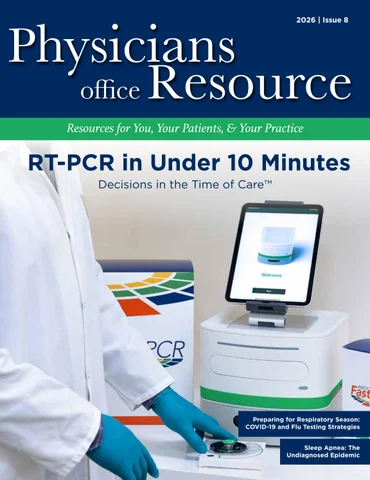
In settings where rapid multiplex molecular testing is available, some practices have found value in increasing diagnostic specificity at the initial visit—not necessarily to change management in every case, but to:
- Reduce diagnostic ambiguity for both clinician and patient
- Improve confidence in withholding unnecessary antibiotics
- Provide clearer guidance on expected disease course
- Decrease “just in case” return visits when symptoms persist longer than anticipated
Importantly, this approach is not universally necessary. In low-risk patients with mild symptoms, supportive care without testing remains entirely appropriate. However, in higher-risk populations—or in practices experiencing high revisit rates for respiratory complaints—targeted use of more sensitive diagnostics may help close the loop at the initial encounter.
The key is not broader testing, but more intentional testing—aligning diagnostic certainty with the clinical and operational needs of the practice.
Operational Strategies for Implementation
To fully realize the benefits of smarter diagnostics, practices should consider:
- Expanding Access to POC Testing
Evaluate which tests can be integrated into the practice setting and train staff accordingly.
- Streamlining Workflow
Ensure that diagnostic testing fits seamlessly into patient flow without creating bottlenecks.
- Training and Education
Keep clinicians and staff updated on new diagnostic technologies and guidelines.
- Monitoring Outcomes
Track return visit rates, diagnostic accuracy, and patient satisfaction to measure impact.
Balancing Efficiency with Patient-Centered Care
While reducing return visits is an important goal, it should never come at the expense of patient-centered care. Some follow-ups are necessary and beneficial, particularly for chronic disease management, complex conditions, and patient reassurance.
The objective is not to eliminate return visits entirely, but to ensure that each visit adds value.
The Future of Diagnostics in Primary Care
Advances in diagnostic technology continue to reshape primary care:
- Expanded molecular testing panels
- At-home diagnostic integration
- Artificial intelligence–driven decision support
- Wearable health data influencing diagnostic pathways
As these tools become more accessible, PCPs will be increasingly empowered to make faster, more accurate diagnoses—further reducing unnecessary return visits.
Conclusion
Reducing return visits through smarter diagnostic decisions represents a win-win for patients, providers, and healthcare systems. By prioritizing diagnostic completeness, leveraging point-of-care and molecular testing, applying structured clinical reasoning, and enhancing patient communication, primary care physicians can resolve more issues at the initial visit and improve overall care quality.
In an era defined by increasing demand and limited resources, the ability to “get it right the first time” is not just a clinical advantage—it is a necessity.